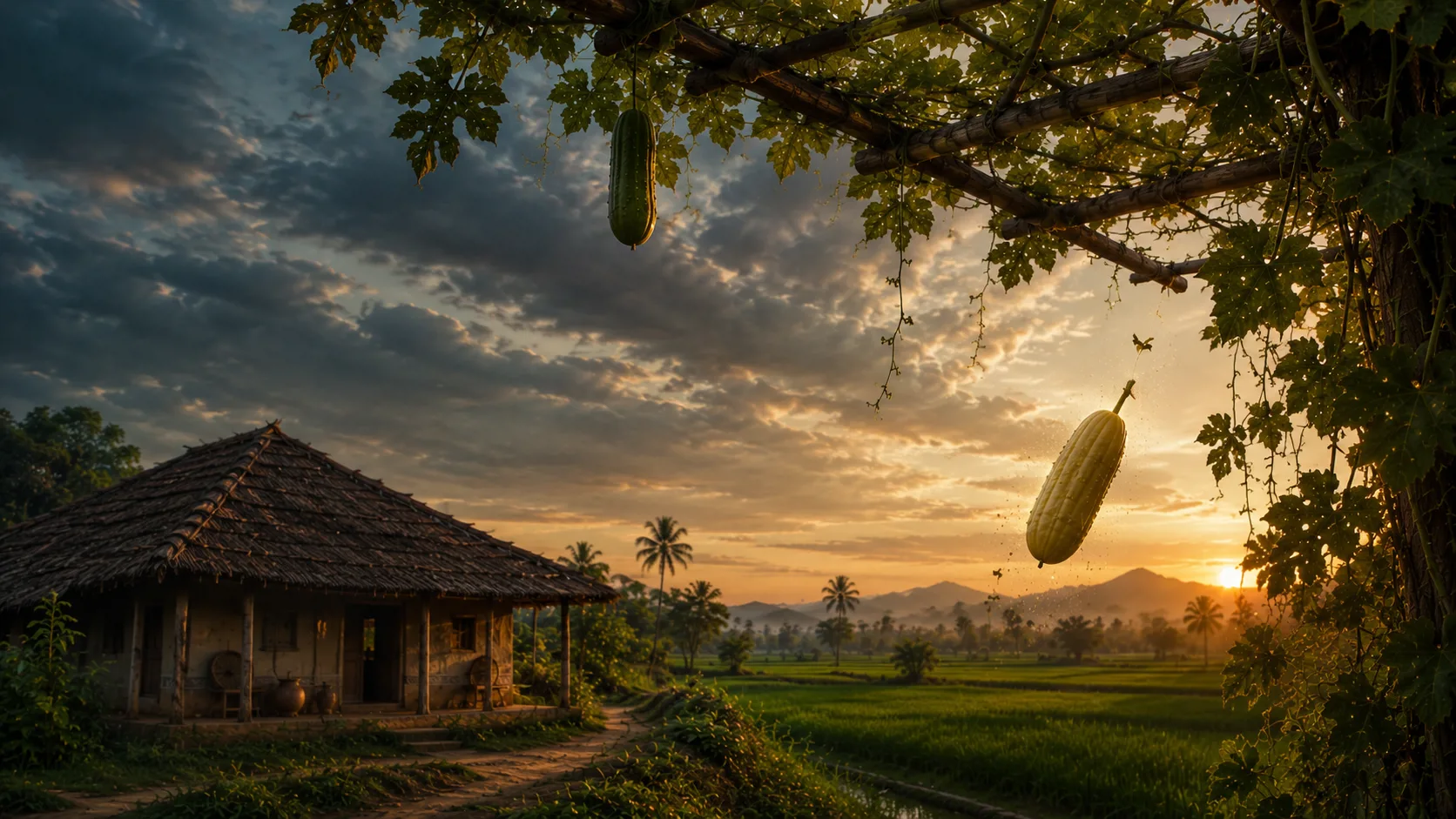
A man recites the Mahāmṛtyuñjaya every morning. He knows the verse asks Śiva to free him from death. He also knows, with equal certainty, that he will die. He does not imagine the mantra will keep his heart beating past its hour. So what, exactly, is he asking for?
The question is not idle, and it is not his alone. It sits under a vast body of verse — Vedic, Upaniṣadic, Paurāṇic, the daily stotras and sahasranāmas — that promises, in language that could not be plainer, victory over death. Take the promises at the flat surface of the words and they collapse at once, because the reciters of these verses died, the ṛṣis who composed them died, and the tradition that preserved them never once treated their deaths as failures of the mantra. The promise was kept. We have only misread what was promised.
This essay is about how to read these verses correctly: what the word mṛtyu is doing when scripture says it can be conquered, and why the conquest it names is real even though the body still falls.
The mistake in the literal reading
The literal reading fails on its own terms. If "freedom from death" meant the body would not die, then every verse promising it would be straightforwardly false, refuted by every cremation ground in Bhārata. A tradition does not preserve a falsehood for three thousand years and recite it at dawn with full conviction. When a reading makes the text absurd, the reading is wrong, not the text.
So the interpreter is forced to ask a different question. Not does scripture lie about death, but what death does scripture mean. And the moment the question is put that way, the texts answer it themselves — because they were never sloppy about this. They had a precise word for the death they meant to conquer, and it was not the death of the body.
पुनर्मृत्युम्
punarmṛtyum
re-death; the dying that comes again
Punarmṛtyu — the death that recurs
The Upaniṣads do not say death. They say re-death. The Bṛhadāraṇyaka coins the term and uses it as a technical word: the soul that has not known Brahman dies, takes another body, and dies again — and again — and the horror is not in any one death but in the recurrence.
स य एवं वेद ... पुनर्मृत्युं जयति
sa ya evaṃ veda ... punarmṛtyuṃ jayati
He who knows thus conquers re-death.
— Bṛhadāraṇyaka Upaniṣad
Read that clause carefully. The thing conquered is punarmṛtyu, not mṛtyu. The knower will still die once — the body is not exempted — but he will not die again, because he will not be born again. The victory is over the return, not over the single departure. This single distinction unlocks the entire corpus. Wherever a verse promises freedom from death, ask whether it means the body's fall or the soul's return, and the verse almost always declares, in its own vocabulary, that it means the return.
The word that settles it — punarmṛtyu (re-death) appears in the Bṛhadāraṇyaka and the early Brāhmaṇa literature as a settled technical term. The tradition was not vague about what it feared; it named the recurrence directly. Every later "conquest of death" verse inherits this precise meaning even when it uses the shorter word mṛtyu.
Tryambakam — freed from death, not from immortality
Return now to the man with his morning mantra. The verse he recites is the most famous death-conquering verse in the entire Veda, and it contains, in its last two words, the whole key.
त्र्यम्बकं यजामहे सुगन्धिं पुष्टिवर्धनम् ।
उर्वारुकमिव बन्धनान्मृत्योर्मुक्षीय मामृतात् ॥
tryambakaṃ yajāmahe sugandhiṃ puṣṭivardhanam
urvārukam iva bandhanān mṛtyor mukṣīya māmṛtāt
We worship the three-eyed one, fragrant, increaser of nourishment. Like the cucumber from its stalk, may I be freed from death — but not from immortality.
— Ṛgveda 7.59.12
Mā amṛtāt — "not from immortality." The petitioner asks to be released from death but explicitly not from amṛta. If mṛtyu here meant biological dying, the phrase would be nonsense: you cannot ask to be freed from dying and in the same breath beg not to be freed from deathlessness. The two clauses only cohere if mṛtyu means bondage to the cycle and amṛta means the liberated state. The prayer is: release me from the wheel, into the deathless.
And the simile seals it. Urvārukam iva — like a ripe cucumber, which detaches from the vine of its own accord, without being torn. The release is not a violent rescue from dying; it is the natural falling-away of one who has ripened. The ripeness is jñāna. The vine is saṃsāra. The fruit, ready, simply lets go.
मृत्योर्मुक्षीय मामृतात्
mṛtyor mukṣīya māmṛtāt
May I be freed from death — not from the deathless.
Asato mā — the death that is ignorance
The most-recited prayer of all reads the same way once the key is in hand.
असतो मा सद्गमय । तमसो मा ज्योतिर्गमय । मृत्योर्मा अमृतं गमय ॥
asato mā sadgamaya | tamaso mā jyotirgamaya | mṛtyor mā amṛtaṃ gamaya
From the unreal lead me to the real; from darkness to light; from death to the deathless.
— Bṛhadāraṇyaka Upaniṣad 1.3.28
The three clauses are one movement, not three. Unreal-to-real, dark-to-light, death-to-deathless — these are three names for a single passage, from avidyā to vidyā. Śaṅkara reads mṛtyu in the third clause as ignorance and its whole brood of effects, and amṛta as the Self that ignorance hid. The prayer does not ask the body to be spared. It asks the knower to wake. The death it flees is the death that is not-knowing.
The mortal becomes immortal — here
If any doubt remained that this immortality is not bodily survival, the Kaṭha and the Bṛhadāraṇyaka remove it by stating exactly when it is attained.
यदा सर्वे प्रमुच्यन्ते कामा येऽस्य हृदि श्रिताः ।
अथ मर्त्योऽमृतो भवत्यत्र ब्रह्म समश्नुते ॥
yadā sarve pramucyante kāmā ye'sya hṛdi śritāḥ
atha martyo'mṛto bhavaty atra brahma samaśnute
When all the desires lodged in the heart fall away, then the mortal becomes immortal — here he attains Brahman.
— Kaṭha Upaniṣad 2.3.14
Atra — here. In this very body, while still embodied, the mortal becomes immortal. This is the doctrine of jīvanmukti, and it is decisive for our reading. The liberated one still has a body, and that body will fall like any other. Yet he is already called amṛta, immortal, now. So the immortality cannot be the body's continuance. It is a present condition of the knower, not a future fate of the flesh. The man is deathless while perfectly mortal — because the death he has conquered was never the body's.
Why this is not a workaround — One might suspect this reading is a later rescue, a way to save face when the mantras "failed." It is not. The texts themselves supply every piece of it: the technical word punarmṛtyu, the explicit mā amṛtāt, the insistence on atra (here, embodied). The cycle-reading is the tradition's own self-understanding, stated in its own vocabulary, long before any apologist needed it. The literal reading is the late mistake; the cyclic reading is original.
Knowing alone — Śvetāśvatara's flat statement
Lest anyone think the conquest comes by ritual longevity or herb or austerity aimed at the body, the Śvetāśvatara states the means with no room left.
तमेव विदित्वातिमृत्युमेति नान्यः पन्था विद्यतेऽयनाय ॥
tam eva viditvā atimṛtyum eti nānyaḥ panthā vidyate'yanāya
Knowing Him alone, one goes beyond death. There is no other path to the goal.
— Śvetāśvatara Upaniṣad 3.8
Atimṛtyum eti — one goes beyond death. Not postpones it, not survives it — transcends it, steps past the whole category. And the means is viditvā, by knowing. Not by living long. The verse forecloses every bodily interpretation: there is no other path, and the one path is knowledge. A man who knew this verse and still feared the loss of his body would have misunderstood his own recitation.
The knot of the heart — Muṇḍaka on the end of return
The Muṇḍaka gives the mechanism. What conquest of re-death actually does, structurally, is exhaust the karmic cause that drives rebirth.
भिद्यते हृदयग्रन्थिश्छिद्यन्ते सर्वसंशयाः ।
क्षीयन्ते चास्य कर्माणि तस्मिन्दृष्टे परावरे ॥
bhidyate hṛdayagranthiś chidyante sarvasaṃśayāḥ
kṣīyante cāsya karmāṇi tasmin dṛṣṭe parāvare
The knot of the heart is cut, all doubts are severed, and one's karmas are exhausted, when That, the high and the low, is seen.
— Muṇḍaka Upaniṣad 2.2.8
Kṣīyante karmāṇi — the karmas are spent. Since it is unspent karma that compels the next birth, exhausting it ends the births, and ending the births ends the re-deaths. The verse never mentions the body's death because that is not the subject. The subject is the engine of the cycle, and the engine is switched off at the root. This is what "conquering death" means when stated as a process rather than a promise.
Across the Gītā — na punarjanma
The Bhagavad-Gītā, which lifts the deathless-Self verses straight from the Kaṭha, makes the equation between conquering death and ending rebirth completely explicit.
जन्म कर्म च मे दिव्यमेवं यो वेत्ति तत्त्वतः ।
त्यक्त्वा देहं पुनर्जन्म नैति मामेति सोऽर्जुन ॥
janma karma ca me divyam evaṃ yo vetti tattvataḥ
tyaktvā dehaṃ punarjanma naiti mām eti so'rjuna
He who knows in truth My divine birth and action, leaving the body, takes no further birth — he comes to Me, Arjuna.
— Bhagavad-Gītā 4.9
Note what the verse plainly concedes and what it promises. It concedes the body's death — tyaktvā deham, "leaving the body." It does not pretend the flesh survives. What it promises is punarjanma naiti — no further birth. The Gītā does not conquer the first death; it conquers the second, third, and all the rest, by ending the births that would occasion them. Conquering death, in the Gītā's own grammar, is na punarjanma — never to be born again.
The saṃsāra-quartet — Scripture rarely names death alone. It names it inside a set: janma-jarā-mṛtyu-vyādhi, birth-old-age-death-disease. The Gītā lists them together as the defects to be seen clearly (13.8); the Viṣṇu-sahasranāma's phalaśruti promises freedom from exactly this quartet, not from death by itself. When death is always named beside birth, ageing, and sickness, the thing feared is plainly the whole condition — saṃsāra — of which a single death is only one face.
The Name and the noose — Purāṇic recitation
Now the stotra and Purāṇa material, which is where most reciters actually live. The promise attached to nāma-japa — that the Name saves from death — reads identically once the key is held.
न वासुदेवभक्तानामशुभं विद्यते क्वचित् ।
जन्ममृत्युजराव्याधिभयं नैवोपजायते ॥
na vāsudeva-bhaktānām aśubhaṃ vidyate kvacit
janma-mṛtyu-jarā-vyādhi-bhayaṃ naivopajāyate
For the devotees of Vāsudeva no misfortune exists anywhere; the fear of birth, death, old age, and disease does not arise.
— Viṣṇu-sahasranāma, phalaśruti
Death does not stand alone here either. It is fourth in a list — birth, death, old age, disease — and what the devotee is freed from is the fear of the set, the dread of the whole revolving condition. The sahasranāma even names the Lord apunarbhavaḥ, "He from whom there is no further becoming," and mṛtyu-mṛtyuḥ, "the death of death." The Name does not make the body deathless. It cuts the root of becoming, so that the devotee, when he dies, does not return.
Ajāmila proves it in narrative. The sinner who cried "Nārāyaṇa" at his end — calling, in fact, for his son — was released from Yama's noose. But mark what release meant: he was not made bodily immortal. He died. What the Name destroyed was the karmic momentum that would have flung him into another birth. He was saved from saṃsāra, in the article of death, by a Name uttered almost by accident — and the Bhāgavata's whole point is that the Name reaches the root even when the tongue does not intend it.
आपन्नः संसृतिं घोरां यन्नाम विवशो गृणन् ।
ततः सद्यो विमुच्येत यद्बिभेति स्वयं भयम् ॥
āpannaḥ saṃsṛtiṃ ghorāṃ yan-nāma vivaśo gṛṇan
tataḥ sadyo vimucyeta yad bibheti svayaṃ bhayam
Fallen into terrible saṃsṛti, one who utters that Name even helplessly is at once released — that Name before which Fear itself is afraid.
— Bhāgavata Purāṇa 1.1.14
Saṃsṛtiṃ ghorām — terrible saṃsṛti, the round of birth and death, named outright as the thing one is fallen into and released from. Not the deathbed. The wheel. The verse could not be clearer about which death the Name defeats.
Mṛtyuñjaya — the death of the great death
Which returns us to Śiva, and to the man with his morning mantra. Śiva is Mahāmṛtyuñjaya, conqueror of the great death — and the adjective matters. Not the small death of the body, which comes to all and which Śiva, as Kāla and Mṛtyu himself, in fact administers. The great death is saṃsāra, the deathing-and-redeathing without end, and it is this that the Mṛtyuñjaya conquers.
मृत्युञ्जयाय रुद्राय नीलकण्ठाय शम्भवे ।
अमृतेशाय शर्वाय महादेवाय ते नमः ॥
mṛtyuñjayāya rudrāya nīlakaṇṭhāya śambhave
amṛteśāya śarvāya mahādevāya te namaḥ
Salutation to the Conqueror of Death, to Rudra, to the blue-throated Śambhu, to the Lord of the deathless nectar, to Śarva, to Mahādeva.
— Mṛtyuñjaya invocation
Amṛteśa — Lord of amṛta. The same word that closed the Tryambakam closes this. The death Śiva conquers and the deathlessness Śiva bestows are the same pair the whole tradition has been naming: bondage to the wheel, and release into the Self. Mārkaṇḍeya, the boy spared from Yama at the liṅga, is the icon of it — but the gift the icon points to is not sixteen years stretched to forever. It is the goal, the gati, beyond where Yama's writ runs at all.
How to read any such verse
The key, once held, fits every lock. When a verse — Vedic, Upaniṣadic, Paurāṇic, a stotra at dawn — promises freedom from death, do not read it as a promise that the body will not fall. Read it through five tests the texts themselves supply.
First, look for the word re-. Where the text says punarmṛtyu or punarjanma, it has told you outright that the enemy is the recurrence, not the single death.
Second, look for amṛta in the same breath. Where the verse asks freedom from death but not from the deathless — mā amṛtāt — death must mean bondage and amṛta must mean the liberated state, or the sentence contradicts itself.
Third, look for atra, here. Where the mortal becomes immortal in this body, the immortality cannot be the body's continuance; it is the knower's present condition.
Fourth, look for the quartet. Where death is named beside birth, ageing, and disease, the thing feared is the whole revolving condition — saṃsāra — and death is only its fourth face.
Fifth, look for the means. Where the means is viditvā, by knowing, and the text says there is no other path, no bodily reading survives. Knowledge conquers what knowledge can conquer: the ignorance that is the true death.
Apply these five and the corpus stops contradicting the crematorium. The ṛṣis died; the mantra held. The man reciting Tryambakam this morning is not asking to keep his heartbeat past its hour. He is asking, in the oldest and most exact words his tradition possesses, that when the cucumber ripens and lets go of the vine, it does not fall back to be grown again. He is asking to be done with the wheel. That prayer has always been answerable, and it has always been the prayer that was meant.
मृत्योर्मा अमृतं गमय
mṛtyor mā amṛtaṃ gamaya
From death, lead me to the deathless.